The Creative Flow Journal · Make It at Home
Fashion Design for Beginners: Sketches, Swatches and Story Boards
Start designing clothes at home with a story board, simple sketches and fabric swatches, plus Philadelphia fashion inspiration to spark ideas.
Have you ever looked at an outfit and thought, "I'd make that sleeve longer," or "That would look amazing in orange"? Congratulations. You're already thinking like a designer.
At Inner Vision Arts, Danielle Wilson's Fashion Design workshop teaches basic techniques that turn creative ideas into real clothing. We explore textures, fashion sketching, swatches, styling mannequins, color theory and fashion story boards. Fashion workshops encourage self-expression, build confidence, offer a creative way to tell stories and teach new skills. Here's how to start at home.
What fashion designers actually do
According to the U.S. Bureau of Labor Statistics, fashion designers sketch designs, choose fabrics and patterns, study trends and decide on a theme for a collection. The skills they list include artistic ability, creativity and attention to detail, like noticing small differences in color. They also note that a portfolio of design work is essential for people who want to enter the field.
The good news? You can practice every one of those steps at your kitchen table.
Step 1: Build a story board
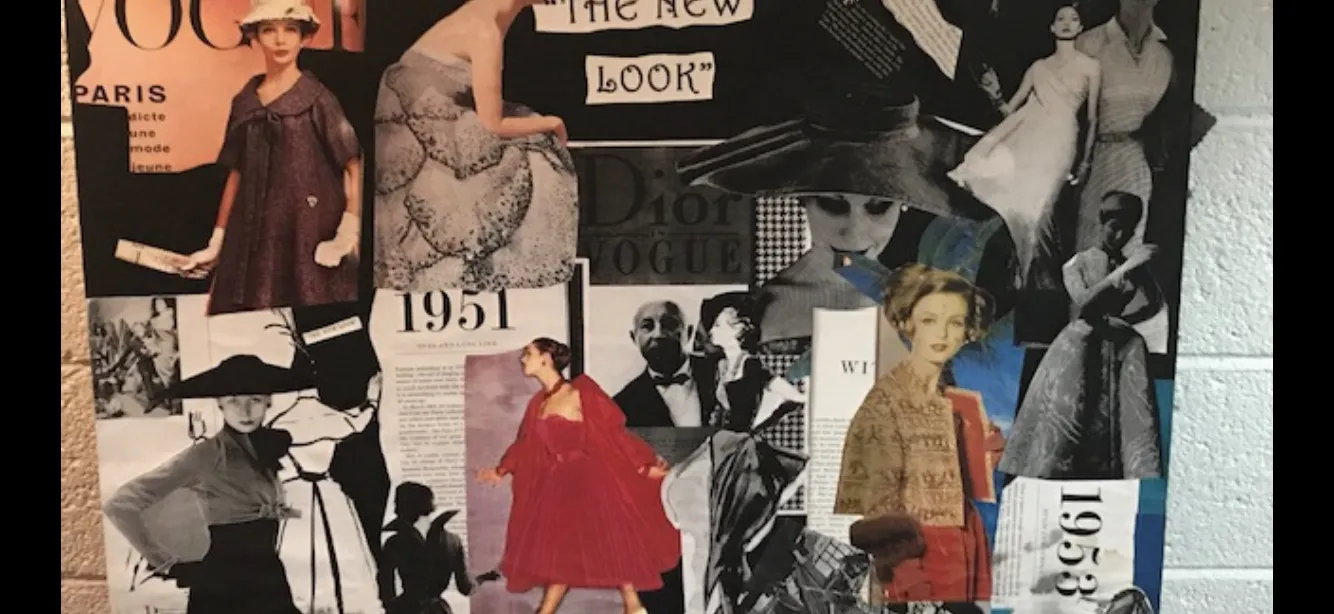
A fashion story board (some people call it a mood board) is a collage that sets the feeling of your designs. Pick a theme, like "Philly summer," "ocean storm" or "Grandma's garden." Then gather:
- Magazine clippings and printed photos
- Paint chips from a hardware store
- Scraps of fabric, ribbon and buttons
- A few words that capture the mood
Even famous artists work this way. When the Guggenheim showed Faith Ringgold's story quilt Tar Beach, it also displayed sketches, mock-ups and fabric swatches from her archive. Big ideas start with small pieces.
Step 2: Sketch your ideas
Designers often sketch on a simple figure outline called a croquis. Don't worry about drawing a perfect person. Try this:
- Draw a tall, light stick figure with an oval head.
- Add simple shapes for the body: a rectangle for the torso, long ovals for the legs.
- Draw your garment on top, pressing a little harder.
- Add details like pockets, buttons, ruffles or stitching.
Make five quick versions of the same idea. Change one thing each time: the neckline, the length or the sleeves. That's how designers explore.
Step 3: Collect swatches and textures
A swatch is a small sample of fabric. Cut little squares from old clothes and glue them next to your sketches. Notice how denim feels different from satin, and how a knit stretches. Texture changes everything about a design.
Working with fabric is a popular creative outlet. The National Endowment for the Arts found that 11.7% of U.S. adults did weaving, crocheting, quilting, needlepoint, knitting or sewing in 2022.
Step 4: Play with color
Color can make a design feel calm, bold, playful or elegant. Try these simple combos:
- Opposites: colors across the color wheel, like blue and orange, pop next to each other.
- Neighbors: colors side by side, like blue, teal and green, feel calm and smooth.
- One color, many shades: light pink, rose and berry create an easy, polished look.
Philadelphia fashion inspiration
You don't have to go far for ideas. The Philadelphia Museum of Art's Costume and Textiles collection is one of the oldest and largest in the country, with more than 30,000 objects spanning about 2,000 years. Highlights include Grace Kelly's 1956 wedding dress, with a bodice of antique rose point lace and seed pearls.
The museum also celebrated designer Patrick Kelly in its 2014 show Runway of Love, featuring some eighty ensembles. Kelly grew up in Mississippi, where his grandmother mended his shirts with mismatched buttons, a look he later turned into his signature. In 1988 he became the first American and the first Black designer elected to France's Chambre Syndicale, a leading Paris fashion association.
And there's Ann Lowe, who learned her craft from her mother and grandmother and designed Jacqueline Kennedy's 1953 wedding dress, according to the Library of Congress.
Bonus: design with what you have
Upcycling, or turning old clothes into something new, is a creative and earth-friendly challenge. The EPA estimates that Americans generated 17 million tons of textiles in 2018, and only 13% of clothing and footwear was recycled. Try redesigning one old T-shirt with paint, patches or new buttons.
Design with us
Danielle's love of fashion and art runs deep, and her workshops welcome kids, teens and adults to sketch, style and dream. Visit our Fashion Design workshop page or book a fashion design workshop for your school, camp, youth program or party. Love beads, too? Read beading-and-fine-motor-skills.html.
Want to practice color combos right now? Play in our online Pot Studio. Questions? Call (215) 407-0344. Your first collection is waiting. Save your spot.
By the numbers
Try this at home
- Pick a theme and make a one-page story board from magazines, paint chips and fabric scraps.
- Draw five quick versions of one outfit, changing just one detail each time.
- Cut small swatches from old clothes and label each one by texture.
- Redesign an old T-shirt with fabric paint, patches or mismatched buttons.
Want to try it virtually first? Paint a 3D pot in our Pot Studio →
Bring it to your group
Fashion Design with Danielle
Sketching, swatches, styling, color theory and story boards. We come to you, all materials included. Book at least 2 weeks ahead.
Sources
- U.S. Bureau of Labor Statistics: Fashion Designers, Occupational Outlook Handbook
- Philadelphia Museum of Art: Costume and Textiles
- Philadelphia Museum of Art: Patrick Kelly, Runway of Love
- Peabody Essex Museum: Exhibition celebrates Patrick Kelly
- Library of Congress Blog: Black Dressmakers for First Ladies
- U.S. EPA: Textiles, Material-Specific Data
- National Endowment for the Arts: Arts Participation Patterns in 2022
This article shares general information about creativity and wellbeing. It is not medical or mental-health advice. Formal art therapy is provided by credentialed art therapists; Inner Vision Arts offers therapeutic, fun art workshops.