The Creative Flow Journal · Community Art
A City of Murals: What Philadelphia Teaches Us About Community Art
How Philadelphia became the Mural Capital of the World, and three lessons its walls teach about making art together.
Walk through almost any Philadelphia neighborhood and you might find a wall that tells a story. A smiling face. A field of flowers. A scene from the neighborhood's past. Philadelphia is famous for its murals, and the story behind them teaches a big lesson about what art can do for a community. It is a lesson close to Danielle Wilson's heart. Her studio, Inner Vision Arts, lives by the motto connecting our community through art.
The "Mural Capital of the World"
Mural Arts Philadelphia describes itself as the nation's largest public art program. It has spent more than 40 years using art to spark change. Each year it works with artists and communities on 50 to 100 public art projects, and about 15,000 residents and visitors tour its outdoor gallery. That work has helped Philadelphia earn international recognition as the "Mural Capital of the World."
A few fun facts from Mural Arts:
- The city's largest mural, How Philly Moves, covers about 85,000 square feet on a parking garage at Philadelphia International Airport. It is the second-largest mural in the world.
- One mural takes an average of 30 gallons of paint.
- The program works with more than 150 public and private partners each year.
From graffiti to community art
The story started in 1984. According to Mural Arts' history, Mayor Wilson Goode created the Philadelphia Anti-Graffiti Network that year. The effort grew partly out of grassroots cleanup work in Mantua, a West Philadelphia neighborhood. Jane Golden joined in 1984 to engage young people through the arts. Her approach helped graffiti writers turn their skills into paid work creating community art. By the mid-1990s, the network had helped create more than 1,000 outdoor murals.
That is a beautiful idea: instead of only painting over what people made, the city invited them to make something together.
Art that supports healing
Murals are not just decoration. Mural Arts' Porch Light program uses public art to promote mental health and strengthen communities. It has completed more than 100 murals and public art projects and engages more than 3,000 community members every year. The Yale School of Medicine studied three Porch Light communities and found significant positive effects for participants and for the neighborhoods where the projects were installed.
This lines up with bigger research. A 2019 World Health Organization review of more than 3,000 studies found that the arts can play an important role in promoting health and well-being. A 2010 public health review also found clear signs that taking part in the arts has positive effects on health, while calling for more research.
A city full of creative roots
Murals are just one thread in Philadelphia's art story. The Pennsylvania Academy of the Fine Arts was founded in 1805 as the first school and museum of fine arts in the United States. And on South Street, artist Isaiah Zagar mosaicked more than 200 public walls over more than 50 years. You can read more about his work in Broken Tiles, Big Dreams.
Three lessons from Philly's murals
1. Art belongs to everyone. Murals sit outside, where anyone can enjoy them. Making art can be just as open. The National Endowment for the Arts reports that 52 percent of U.S. adults created or performed art on their own in 2022. In a Drexel University study, about 75% of adults had lower cortisol, a stress hormone, after 45 minutes of art making, no matter their experience.
2. Making it together matters. Community murals are planned with neighbors, not just for them. When people help create something, they feel a sense of pride and ownership.
3. Place matters. Art changes how a space feels. A blank wall becomes a landmark. A park bench becomes a front-row seat to nature.
Paint in the Park: community art, Inner Vision Arts style
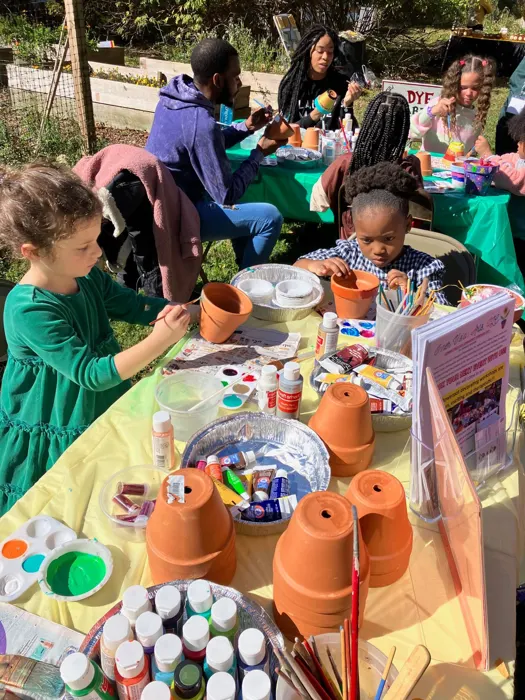
That last lesson is why we love our Paint in the Park workshop. Whether you are an experienced artist or a beginner, everyone is welcome. Relax and enjoy the fresh air in local parks or farms while painting nature's scenery: birds in the trees, the sun in the sky, people passing by, blooming flowers, or anything interesting your eyes capture. Just let your creativity flow.
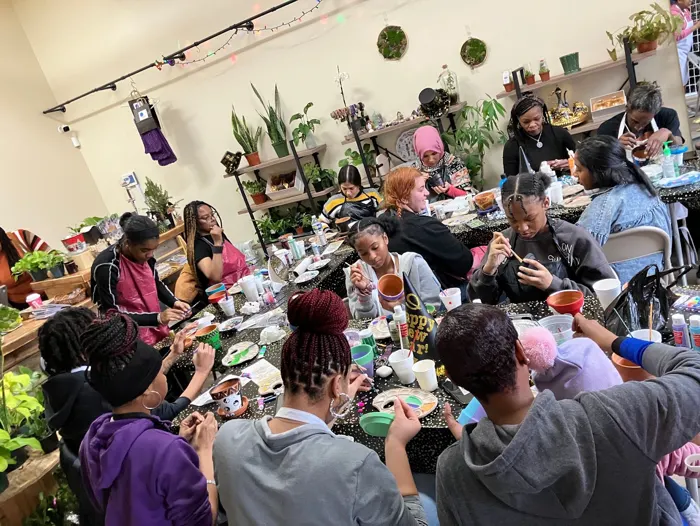
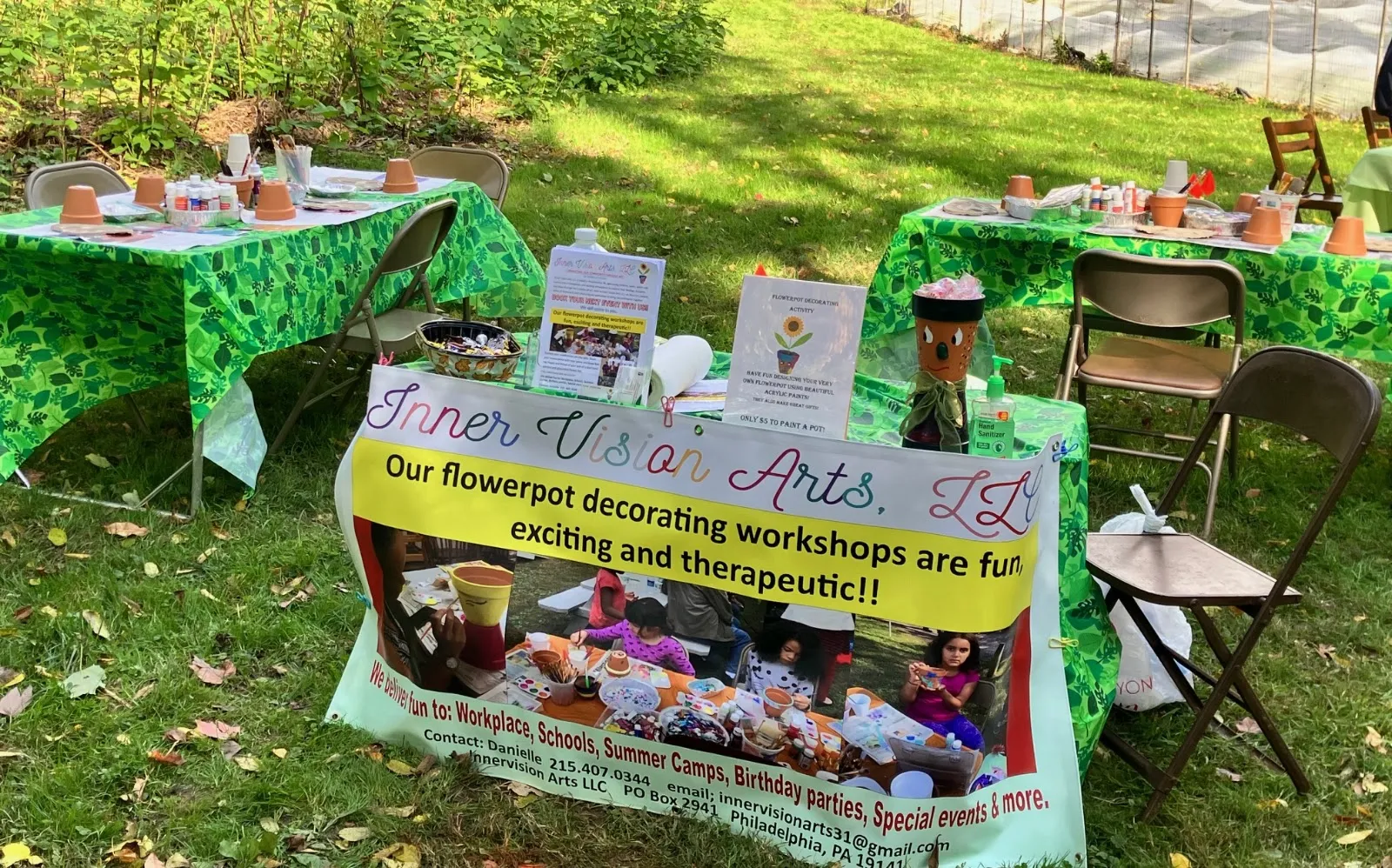
Danielle brings her passion for art to many kinds of community settings, including special events, health and wellness fairs, art festivals and non-profits. Every one of them is a chance to turn a space into a place where people make something together.
A quick note: our workshops are therapeutic and fun, but they are not clinical therapy. Formal art therapy is practiced by credentialed art therapists.
Bring the spirit of Philly's walls to your group
Want a quick creative warm-up? Design something in our online Pot Studio. Then book Paint in the Park for your family, school, camp or community group. Questions? Call (215) 407-0344. Let's add a little more color to the city. Choose your date.
By the numbers
Try this at home
- Take a walk in your neighborhood and photograph three murals or colorful walls that catch your eye.
- Sketch a mural idea for your own block: what story would you want neighbors to see?
- Bring a small sketchbook to a park and paint or draw one thing you see moving.
Want to try it virtually first? Paint a 3D pot in our Pot Studio →
Bring it to your group
Paint in the Park with Danielle
Relax outdoors and paint nature's best scenery. We come to you, all materials included. Book at least 2 weeks ahead.
Sources
- Mural Arts Philadelphia: About
- Mural Arts Philadelphia: Our History
- Mural Arts Philadelphia: Porch Light
- World Health Organization: What is the evidence on the role of the arts in improving health and well-being? (2019)
- American Journal of Public Health: The Connection Between Art, Healing, and Public Health (2010)
- Pennsylvania Academy of the Fine Arts: About PAFA
- Philadelphia's Magic Gardens: About Isaiah Zagar
- National Endowment for the Arts: Quick Study on 2022 arts participation
This article shares general information about creativity and wellbeing. It is not medical or mental-health advice. Formal art therapy is provided by credentialed art therapists; Inner Vision Arts offers therapeutic, fun art workshops.