The Creative Flow Journal · Art & Wellbeing
Write It, Draw It: How Words and Pictures Feed Each Other
Drawing can make writing stronger, and writing can deepen art. Here's the research, a few famous examples and easy prompts to try at home.
Some people think of themselves as "word people." Others are "picture people." At Inner Vision Arts, we like to think everyone can be both.
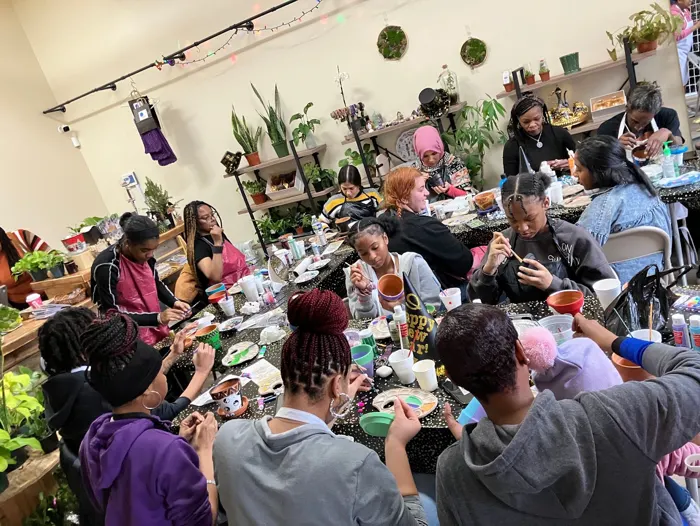
That's the idea behind Danielle Wilson's Creative Writing & Drawing workshop, a two-in-one class where people express their creativity through writing, drawing or both. To add a little spontaneity, the instructor or the group suggests a word, phrase, scene or topic, and everyone writes or draws around that idea. Along the way, we discover how imagination can inspire writing, and how writing can be a powerful way to experience art.
It turns out that research agrees: words and pictures really do feed each other.
It starts with a scribble
Long before children can spell, they make marks. Researchers writing for Frontiers for Young Minds describe how children's early scribbles grow into both drawings and writing. Somewhere around ages 3 to 5, kids begin to understand that lines and shapes can stand for real things. That's the very beginning of writing.
In other words, drawing and writing start out as the same thing. We just tend to separate them as we grow up.
Drawing first makes writing stronger
In a classic study published in Studies in Art Education, researchers worked with 42 second and third graders for 15 weeks. Half the students drew pictures to plan their stories. The other half only talked about their ideas first. The result? The students who drew before writing produced higher-quality stories. The researchers concluded that drawing can be a better way to rehearse a story than discussion alone.
It makes sense. When you sketch a scene, you have to decide who's there, where they're standing, what the weather is like and what's about to happen. That's a story outline, made with a pencil.
Drawing helps you remember
There's a memory boost, too. At the University of Waterloo, people who drew words instead of writing them often remembered more than twice as many. The quality of the drawings didn't matter, and the effect held even when people had just four seconds to sketch. Students, try it with vocabulary words!
Writing helps you feel and reflect
Writing can work in the other direction, helping us understand what we feel. Researchers have studied "expressive writing," where people spend 15 to 20 minutes writing about their thoughts and feelings over a few sessions. A review in Advances in Psychiatric Treatment found it was linked to benefits for physical and emotional health, though results for mood were less consistent. It's a helpful habit, not a treatment, and it pairs beautifully with a sketchbook.
Artists who blend words and pictures
Some of America's most powerful art mixes images and text:
- Jacob Lawrence told the story of the Great Migration in 60 painted panels. Each panel has a short caption. Panel 54, for example, reads, "For migrants, the church was the center of life." The words and paintings work together like a picture book for grown-ups.
- Faith Ringgold created painted "story quilts" that combine painting, fabric and storytelling, as Craft in America describes. Her 1988 quilt Tar Beach, now at the Guggenheim, tells the story of a Harlem girl who soars above the city, and Ringgold incorporated text and imagery to tell her stories. She also received a Caldecott Honor for her picture-book work.
You're in good company
Creative writing is something lots of people do for fun. The National Endowment for the Arts found that 6.9% of U.S. adults did creative writing, like poetry, fiction or plays, in 2022, and more than half of adults created or performed some kind of art.
Prompts to try at home
- One word, two ways. Pick a word like "storm." Draw it for five minutes, then write about it for five minutes.
- Caption it. Draw a scene from your day and add one sentence underneath, like Jacob Lawrence's captions.
- Draw the story first. Before writing a story, sketch three boxes: beginning, middle and end.
- Swap with a friend. One person draws, the other writes a story about the drawing.
Love open-ended creating? Read about freestyle-friday-story.html.
Write and draw with us
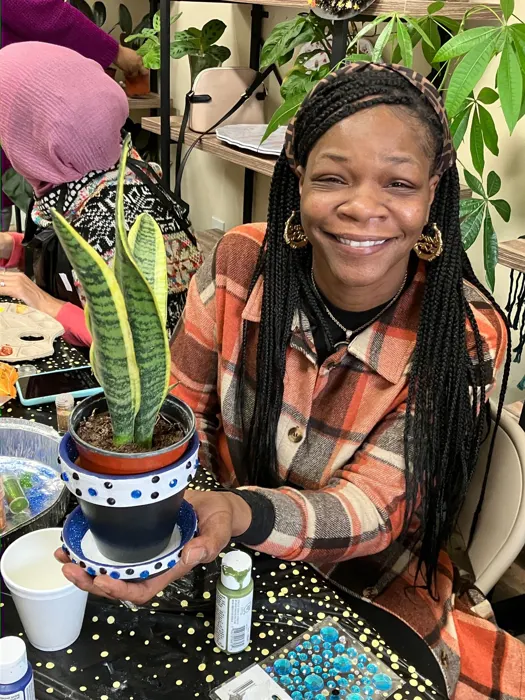
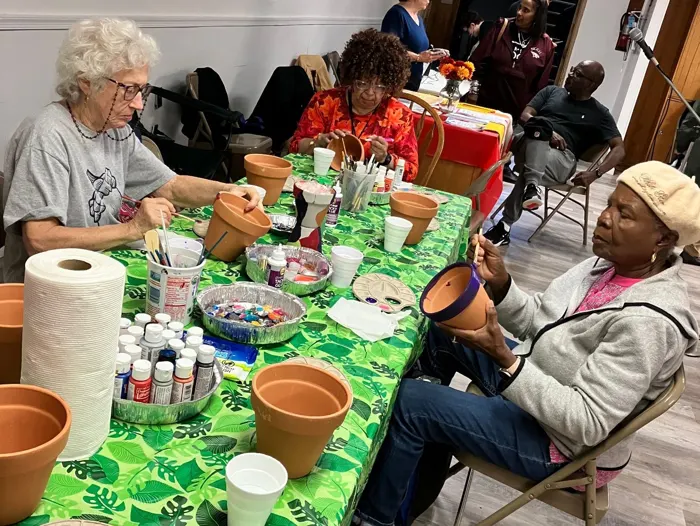
Danielle's passion for art has always included words: her original Freestyle Fridays began with student journals. In our Creative Writing & Drawing workshop, people of all ages share ideas openly in a relaxed, fun room. See details on our Creative Writing & Drawing page, or book a workshop for your class, library, senior center or group.
Want to doodle right now? Try our online Pot Studio. Questions? Call (215) 407-0344. Grab a pencil, pick a word and save your seat.
By the numbers
Try this at home
- Pick one word, draw it for five minutes, then write about it for five minutes.
- Sketch three boxes (beginning, middle, end) before writing your next story.
- Draw a scene from today and add a one-sentence caption underneath.
- Trade with a friend: you draw, they write the story, then switch.
Want to try it virtually first? Paint a 3D pot in our Pot Studio →
Bring it to your group
Creative Writing & Drawing with Danielle
Write, draw, or both — around a word, a phrase or a scene. We come to you, all materials included. Book at least 2 weeks ahead.
Sources
- University of Waterloo: Need to remember something? Better draw it
- Studies in Art Education (Univ. of Northampton record): The Art of Writing, Drawing as Preparation for Narrative Writing
- Frontiers for Young Minds: Drawing Into Early Writing, It All Starts with Scribble Lines
- Advances in Psychiatric Treatment (Cambridge): Emotional and physical health benefits of expressive writing
- The Phillips Collection: Jacob Lawrence, The Migration Series
- Solomon R. Guggenheim Museum: The Reach of Faith Ringgold press kit (PDF)
- National Endowment for the Arts: Arts Participation Patterns in 2022
This article shares general information about creativity and wellbeing. It is not medical or mental-health advice. Formal art therapy is provided by credentialed art therapists; Inner Vision Arts offers therapeutic, fun art workshops.