The Creative Flow Journal · Art & Wellbeing
What the Research Says About Art and Stress
Can making art lower stress? A plain-English tour of the science, from a Philadelphia cortisol study to a WHO review of 3,000+ studies.
Have you ever noticed how time seems to melt away when you are painting, doodling or shaping clay? Your shoulders drop. Your breathing slows. For a little while, the to-do list goes quiet. Danielle Wilson built Inner Vision Arts around that feeling, because she has a deep passion for art and loves helping others create. But is there real science behind it? Let's look at what researchers have found, in plain English.
First, what is stress in the body?
When we feel pressure, the body releases a hormone called cortisol. A little cortisol is normal and even helpful, because it keeps us alert. Scientists can measure cortisol in a person's saliva, which gives them a simple way to check how a body is reacting before and after an activity. That makes it a handy tool for studying art.
The Philadelphia study: 45 minutes of art
In 2016, a team at Drexel University led by art therapy researcher Girija Kaimal invited 39 adults, ages 18 to 59, to make art for 45 minutes. People could use markers and paper, sculpting clay or collage materials, and they could make anything they liked.
The result? About 75% of the participants had lower cortisol after making art. Even better, past art experience made no difference. Beginners and experienced artists benefited in the same way. The researchers called it a pilot study, which means it was small and early. Still, it is a hopeful sign for anyone who has ever said, "I'm not artistic."
Your brain's reward system likes art, too
A year later, the same Drexel group ran a second study on the brain. Twenty-six people wore a special headband that measures blood flow in the front of the brain. They colored a mandala, doodled, and drew whatever they wanted, three minutes each.
During all three activities, blood flow went up in the prefrontal cortex. That area helps us manage thoughts and feelings, and it is part of the brain's reward circuit. The team noted that the sample was small. But the finding hints at something many of us already feel: there may be pleasure in the act of making art itself, no matter how the picture turns out.
The big picture: thousands of studies
Single studies are interesting. Big reviews are stronger, because they look at many studies at once.
- A 2010 review in the American Journal of Public Health concluded that creative engagement can decrease anxiety, stress and mood problems. The authors also said many studies were small and more research is needed.
- In 2019, the World Health Organization reviewed more than 3,000 studies. It found that the arts can help prevent illness, promote health and support people across the whole lifespan.
- The National Institute on Aging notes that activities like music, theater, dance and creative writing have shown promise for well-being, including reduced stress and more social connection, while more research is needed.
Crafts, happiness and the long view
Newer research looks at everyday life. A 2024 study of 7,182 adults in England found that people who created arts and crafts reported higher life satisfaction, more happiness and a stronger sense that life is worthwhile. That held true even after the researchers accounted for things like age, health and income.
Another study, published in the British Journal of Psychiatry, followed 2,148 older adults for about ten years. People who went to museums, theaters or concerts every few months had a 32% lower risk of developing depression. Those who went once a month or more had a 48% lower risk. That study was about enjoying culture, not making it, but it points the same direction: art in your life is linked to a brighter mood.
What the research does not say
It is important to be honest. Art is not a cure, and many of these studies show links, not proof. If you are struggling, please talk with a doctor or mental health professional. Formal art therapy is provided by credentialed art therapists with master's-level training. Inner Vision Arts offers something else: therapeutic, fun art workshops where you can relax, create and connect.
Putting it into practice
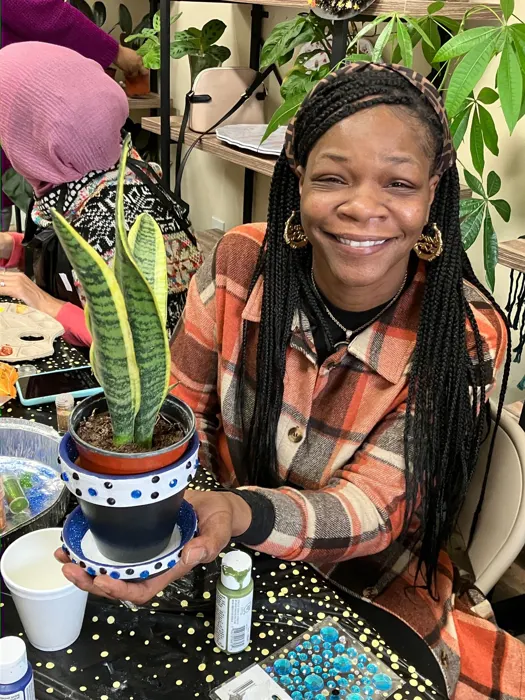
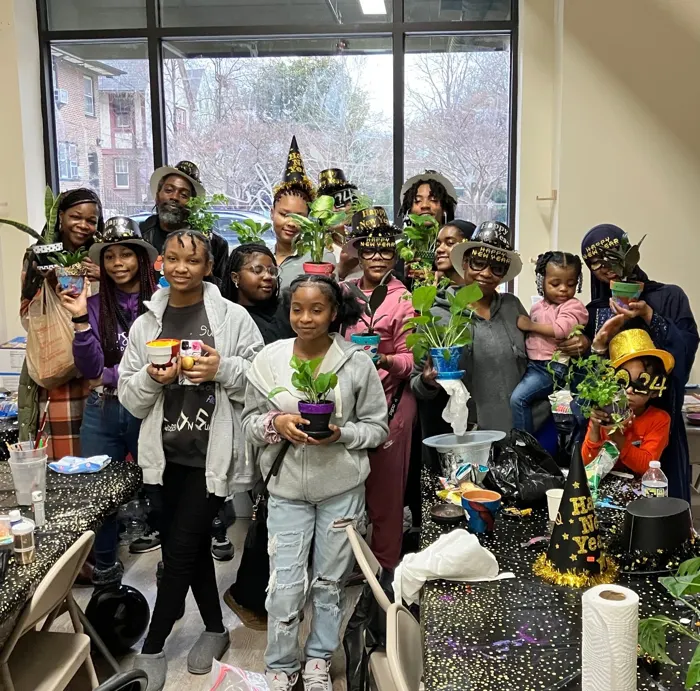
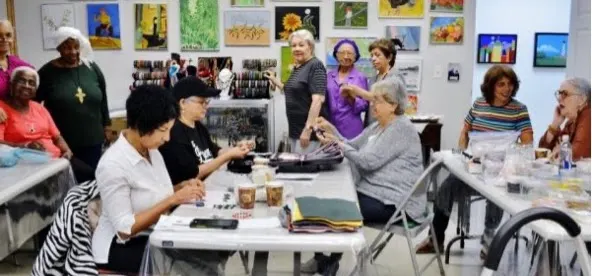
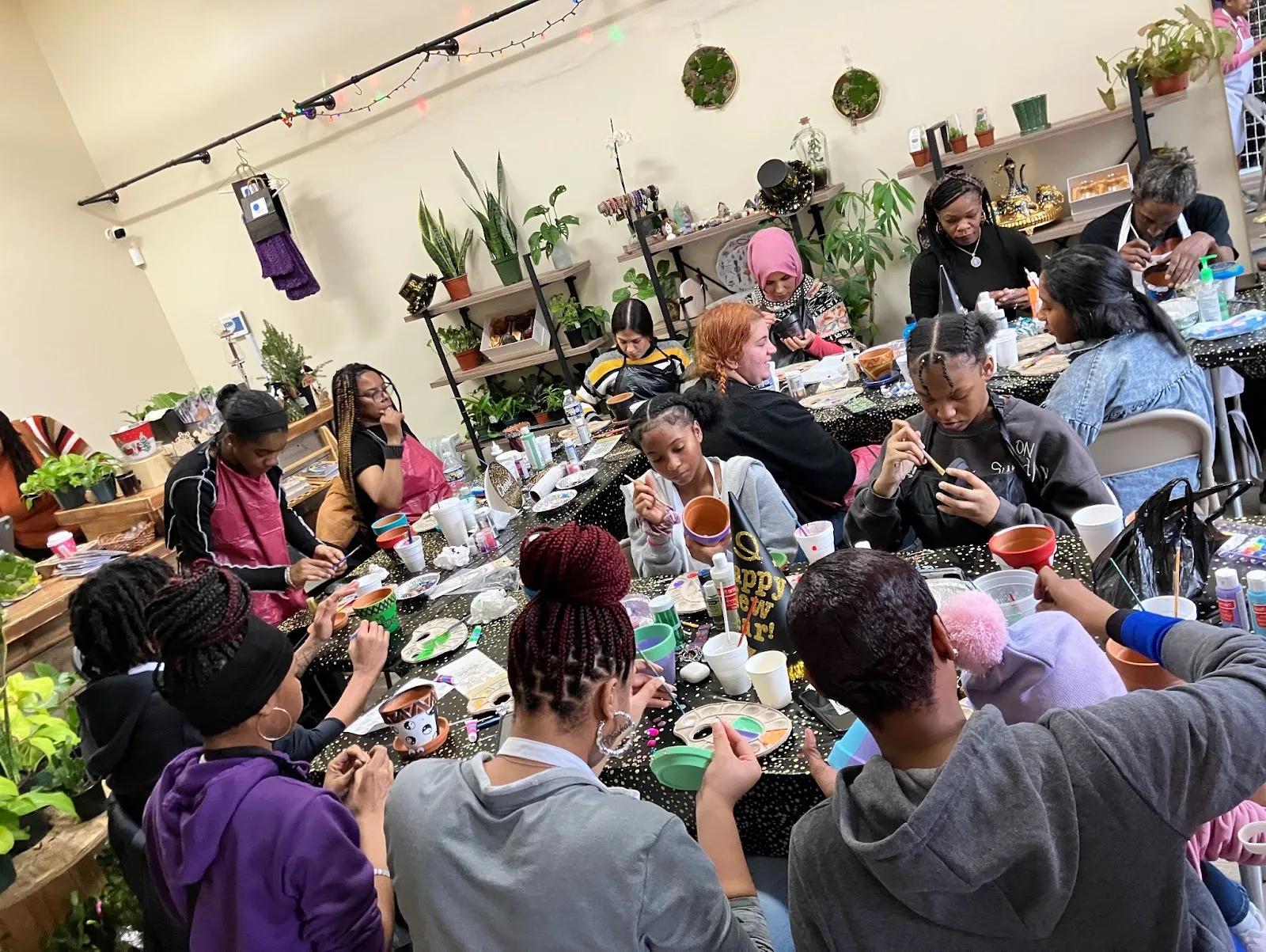
You do not need a lab to try this. You need materials, a little time and a welcoming space. That is exactly what our Painting & Art workshop offers: an open environment for self-expression through painting, pottery, drawing or writing. It is a place to experiment, explore and gain inspiration from each other.
And you would be far from alone. The National Endowment for the Arts reports that 52 percent of U.S. adults made or performed art on their own in 2022. If you want to see the stress-busting side of a simple project, read Why Painting a Flowerpot Feels So Good.
Want a quick taste first? Try our online Pot Studio. When you are ready for the real thing, book a workshop or call (215) 407-0344. Your 45 minutes of calm is waiting. Save your spot.
By the numbers
Try this at home
- Set a timer for 45 minutes and make anything: a collage from old magazines, a clay shape, or a page of doodles.
- Doodle around a circle on a blank page for three minutes, then notice how you feel.
- Keep a small box of markers and paper where you sit to unwind, so art is easier to reach than your phone.
Want to try it virtually first? Paint a 3D pot in our Pot Studio →
Bring it to your group
Painting & Art with Danielle
Painting, pottery, drawing or writing — a space to explore. We come to you, all materials included. Book at least 2 weeks ahead.
Sources
- Drexel University: At Any Skill Level, Making Art Reduces Stress Hormones (2016)
- Drexel University: Making Art Activates Brain's Reward Pathway (2017)
- American Journal of Public Health: The Connection Between Art, Healing, and Public Health (2010)
- World Health Organization: What is the evidence on the role of the arts in improving health and well-being? (2019)
- Frontiers in Public Health: Creating arts and crafting positively predicts subjective wellbeing (2024)
- British Journal of Psychiatry: Cultural engagement and incident depression in older adults (2019)
- National Endowment for the Arts: Quick Study on 2022 arts participation
- American Art Therapy Association: About Art Therapy
This article shares general information about creativity and wellbeing. It is not medical or mental-health advice. Formal art therapy is provided by credentialed art therapists; Inner Vision Arts offers therapeutic, fun art workshops.