The Creative Flow Journal · Art & Wellbeing
The Loneliness Problem, and Why a Shared Art Table Helps
About 1 in 3 U.S. adults report feeling lonely. Here is why making art side by side is a warm, simple way to reconnect.
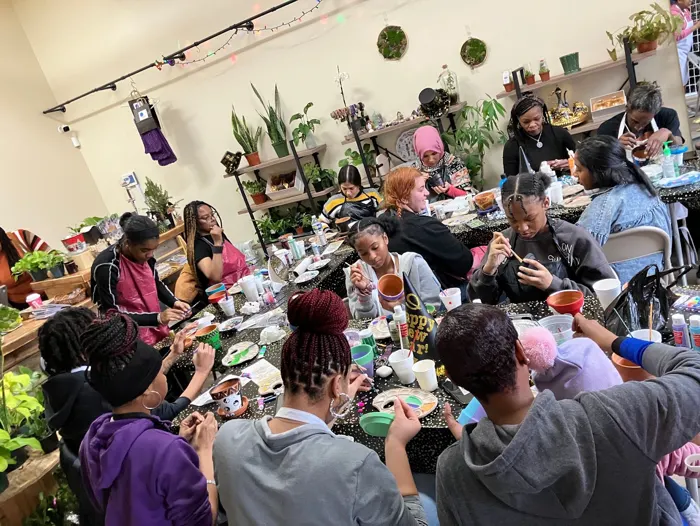
Loneliness is easy to miss. It does not always look sad. It can look like a busy parent who has not had a real conversation in weeks, a teen glued to a screen, or a grandparent whose phone rarely rings. Danielle Wilson's motto for Inner Vision Arts is connecting our community through art, and nowhere is that clearer than at a shared art table. Here is why that matters more than ever.
A quiet problem, everywhere
According to the Centers for Disease Control and Prevention, about 1 in 3 U.S. adults reported feeling lonely in 2022, and about 1 in 4 said they did not have the social and emotional support they need. Worldwide, the World Health Organization reported in 2025 that about 1 in 6 people is affected by loneliness. WHO also estimates that social isolation affects up to 1 in 3 older adults.
Why it matters for health
Loneliness is more than a feeling. The CDC says social isolation and loneliness can raise the chances of heart problems, type 2 diabetes, depression, anxiety and dementia. The National Institute on Aging adds that people who are lonely or isolated may face higher risks of heart disease, depression and cognitive decline. The good news: WHO notes that strong social connections can lead to better health and longer life.
Why an art table works
Starting a conversation cold can be hard. Starting one over a jar of paint is easy. A shared art table helps in a few simple ways:
- Side by side, not face to face. Working next to someone feels relaxed. Nobody has to perform or make small talk.
- Built-in conversation starters. "Can you pass the blue?" "How did you make that swirl?" Art gives people something to talk about.
- Shared materials, shared moments. Trading glitter or buttons turns strangers into collaborators.
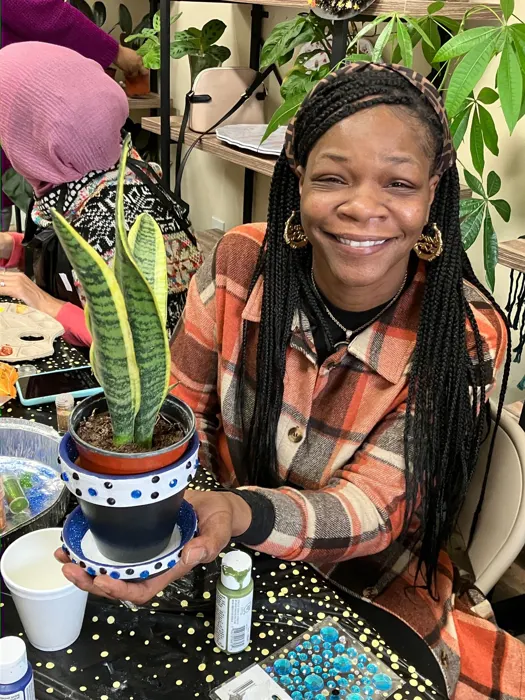
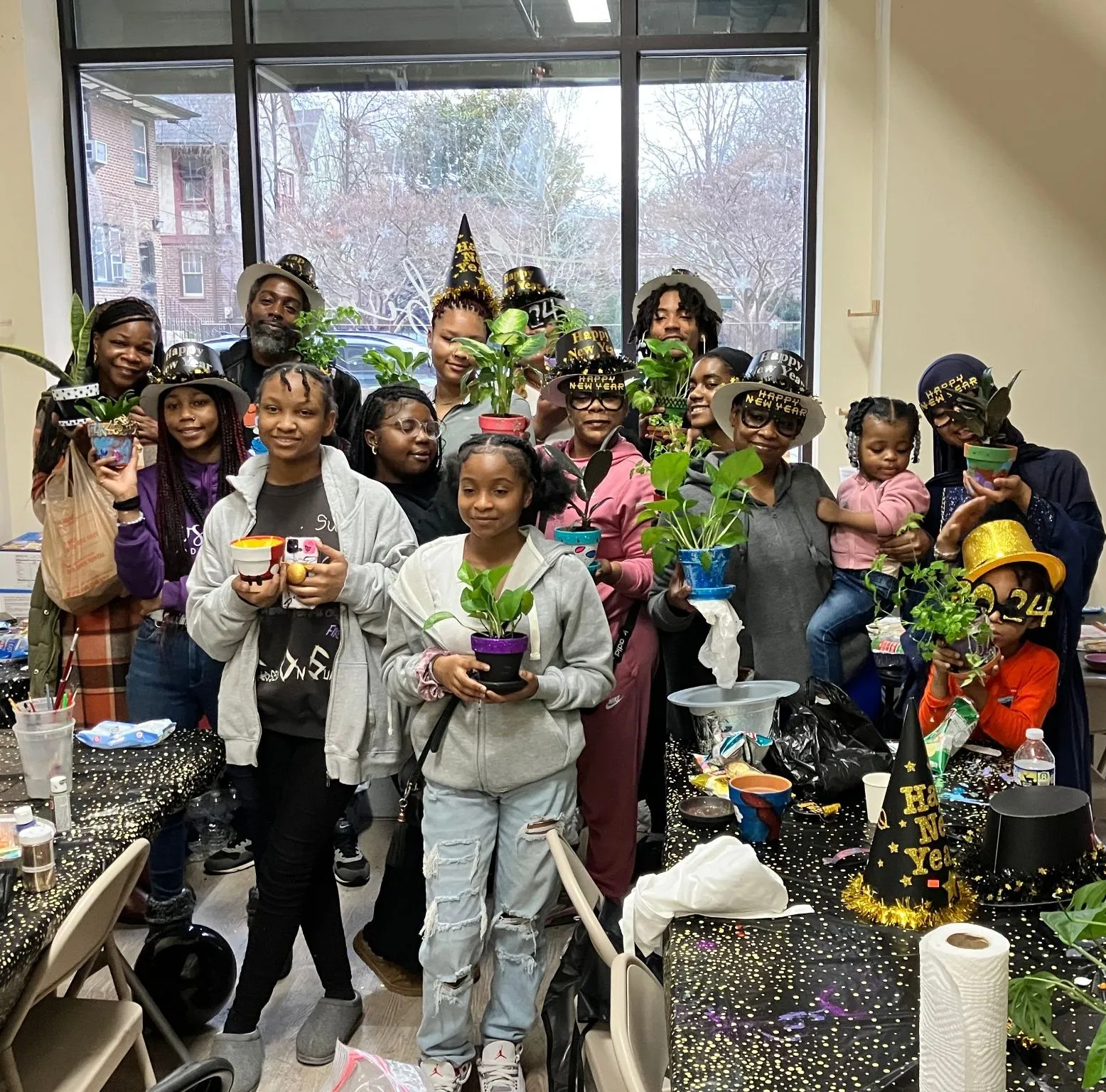
- Something to show. At the end, everyone holds up their work. Applause and compliments are part of the fun.
What the research suggests
The NIA's tips for staying connected include finding an activity you enjoy, restarting an old hobby, or taking a class to learn something new, where you might meet people with similar interests. Its page on activities you enjoy names taking an art class as one way to help maintain well-being.
Group art programs have a track record, too. In the Creativity and Aging Study, older adults in weekly, artist-led group programs reported better health, fewer doctor visits and more involvement in activities than a comparison group. A public health review described a creative arts program for family caregivers, who reported less stress and anxiety and more positive emotions.
Here is an honest twist. A 2024 study of 7,182 adults in England found that arts and crafts were linked with higher happiness and life satisfaction, but not with lower loneliness. The authors pointed out that many crafts are done alone, and said the social side of arts and crafts needs more study. That is a helpful reminder: the together part matters. Painting in a room full of neighbors is different from painting alone.
Philadelphia knows this well. Mural Arts Philadelphia's Porch Light program brings people together to make public art, and a Yale School of Medicine study of three Porch Light communities found significant positive effects for participants and their neighborhoods.
Family Fun Night: the whole family at one table
Our Family Fun Night is all about families coming together to hang out and have fun. Expect games, painting and drawing activities, sharing ideas, meeting new people and much more. It is the perfect picture of the Inner Vision Arts mission.
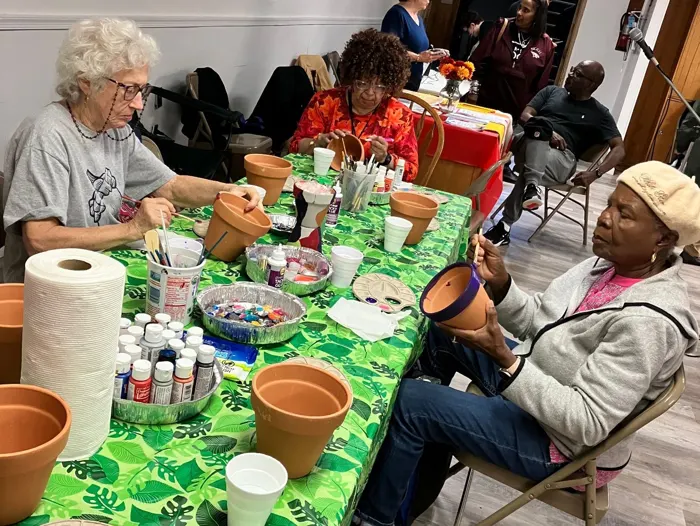
Mixing ages is a bonus. Kids teach grown-ups to loosen up. Grown-ups show kids how to slow down. Grandparents bring stories. Everyone goes home with art and, just as important, with new connections.
A note about care
An art night is a joyful way to connect, but it is not a replacement for professional support. If loneliness feels heavy, please reach out to a doctor or counselor. Formal art therapy is offered by credentialed art therapists. Inner Vision Arts offers therapeutic, fun workshops that bring people together.
Pull up a chair
Want to start small? Design a pot together in our online Pot Studio, then book a Family Fun Night for your family, school, church group or neighborhood. For more on art and stress, read What the Research Says About Art and Stress. Questions? Call (215) 407-0344. There is a seat at the table for everyone. Save your seat.
By the numbers
Try this at home
- Host a kitchen-table art night: one roll of paper down the middle and markers for everyone.
- Invite a neighbor to paint or doodle with you for 30 minutes this week.
- Start a pass-around drawing: each person adds one thing, then passes it on.
Want to try it virtually first? Paint a 3D pot in our Pot Studio →
Bring it to your group
Family Fun Night with Danielle
Games, painting, drawing and new friends — a whole-family night. We come to you, all materials included. Book at least 2 weeks ahead.
Sources
- CDC: Health Effects of Social Isolation and Loneliness
- World Health Organization: Social connection linked to improved health (2025)
- National Institute on Aging: Loneliness and Social Isolation, Tips for Staying Connected
- National Institute on Aging: Participating in Activities You Enjoy As You Age
- National Endowment for the Arts: The Creativity and Aging Study, final report (2006)
- American Journal of Public Health: The Connection Between Art, Healing, and Public Health (2010)
- Frontiers in Public Health: Creating arts and crafting positively predicts subjective wellbeing (2024)
- Mural Arts Philadelphia: Porch Light
This article shares general information about creativity and wellbeing. It is not medical or mental-health advice. Formal art therapy is provided by credentialed art therapists; Inner Vision Arts offers therapeutic, fun art workshops.