The Creative Flow Journal · Kids & Teens
Dream Big, Glue Carefully: Vision Boards for Kids 6 to 12
How to help children ages 6 to 12 make a vision board that builds confidence, sparks big dreams and teaches them to plan the first step.
Ask a seven-year-old what they want to be, and you might hear "an astronaut, a chef and a dog trainer." Ask a ten-year-old, and you might get a shrug. Both answers are perfect places to start a vision board.
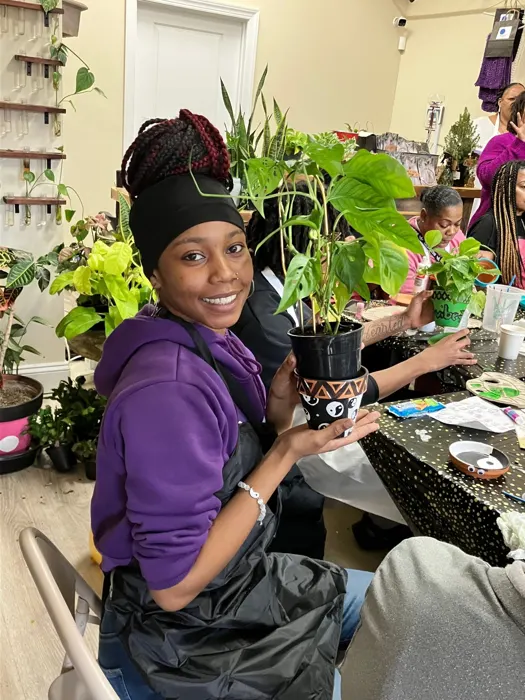
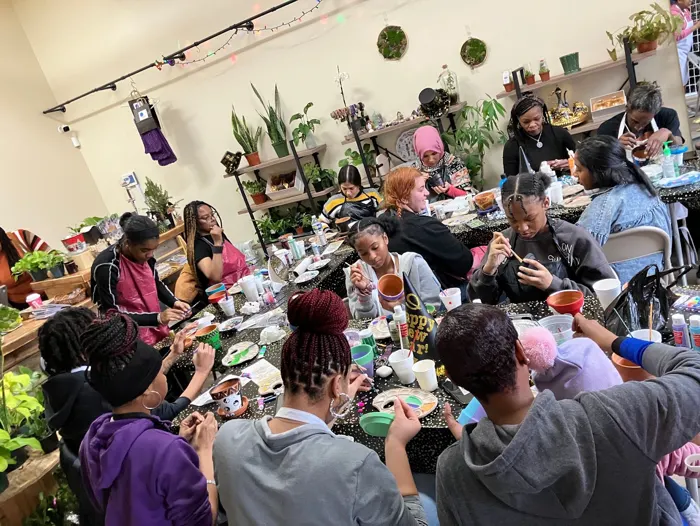
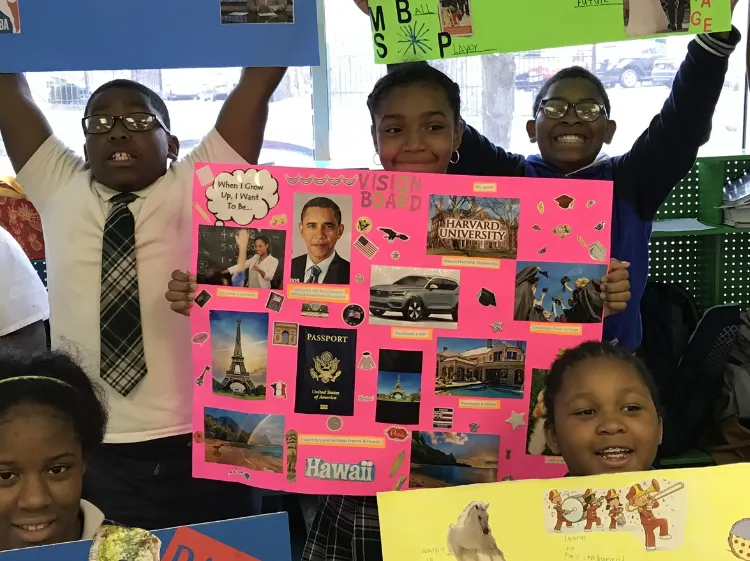
At Inner Vision Arts, Danielle Wilson's youth vision board workshops for ages 6 to 12 are a fun, exciting and relaxed way to help children reflect on their lives and their goals for the future. It's a creative way of helping kids see what they hope for. Here's why it matters, and how to make one at home.
Why making art builds kids up
Researchers at University College London looked at 6,209 children in a large UK study. Kids who did arts activities most days had higher self-esteem than kids who did them less often, as reported by UC Berkeley's Greater Good Science Center. The researchers' big takeaway? "Engagement, not ability, seems to be the key." In other words, your child doesn't need to be "good at art." They just need to do it.
The same research found that painting and drawing were linked to higher self-esteem whether or not parents joined in. So kids can own this project. That fits what motivation scientists call autonomy, competence and relatedness: kids thrive when they choose for themselves, feel capable and feel connected.
School research points the same way. In a large Houston experiment with more than 10,000 students in grades 3 through 8, schools that received extra arts experiences saw fewer discipline problems, stronger writing scores and more compassion for others, according to the researchers' report for the Brookings Institution.
Small planners in training
Children between 7 and 12 are still building the brain skills that help us plan, focus and stick with things. Harvard's Center on the Developing Child offers an activities guide for ages 7 to 12 to help adults strengthen these skills through everyday play and projects. A vision board is a natural fit: choosing images, arranging them and talking through a plan are all small planning workouts.
The WOOP goal method, which stands for Wish, Outcome, Obstacle and Plan, has even been studied with young kids. Its research page notes that first graders improved self-control and reading and writing skills after learning it. For kids, we keep it simple: "What's my wish? What might get in the way? What will I do then?"
Dream big: picking the pictures
Let your child lead. Some kids want a board full of animals. Others want soccer, slime and space. All of it counts. A few gentle prompts can help:
- What makes you happy right now?
- What's something you want to learn this year?
- Who do you want to help?
- Where would you love to visit someday?
Encourage at least one drawing of their own. Scientists at the University of Waterloo found that drawing something helps people remember it, and the quality of the drawing doesn't matter.
Glue carefully: setting up the table
A good kids' art table is safe, a little messy and well stocked:
- Kid-safe supplies. The Art & Creative Materials Institute recommends that you check for the AP Seal on creative products for kids in sixth grade or younger. The seal means a toxicologist has reviewed the product.
- Glue sticks over liquid glue for the youngest makers. Fewer puddles, happier magazines.
- Child-size scissors and a grown-up nearby for tricky cuts.
- Old magazines, stickers, markers and printed photos. Family pictures are a big hit.
- Sturdy poster board so the finished board can hang proudly.
Ages 6 to 8 vs. 9 to 12
Younger kids (6 to 8) do well with three or four big pictures and one word for each, like "brave," "read" or "friends." Keep it short and joyful.
Older kids (9 to 12) can add a small plan: "If I feel nervous at tryouts, then I'll take three deep breaths." They often enjoy sections, too, such as school, fun and family.
Talk about it, then hang it up
The magic happens in the conversation afterward. Ask your child to give you a "tour" of their board. Listen more than you talk. Then hang it at their eye level, where they'll see it every day.
If your child ever seems stressed or stuck in worry, art can be a comfort, but it is not a substitute for professional help. Formal art therapy is offered by credentialed art therapists. Inner Vision Arts offers therapeutic, fun art workshops for families, schools and camps.
Make one with us
Danielle's love of art and her passion for helping kids believe in themselves shine in every youth workshop. Visit our Vision Boards workshop page or book a youth vision board workshop for a birthday party, classroom, summer camp or community event. For the grown-ups, read vision-boards-that-work.html.
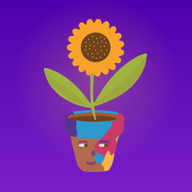
Want a creative warm-up at home? Let your child design a pot in our online Pot Studio. Questions? Call (215) 407-0344. Ready to dream big? Reserve your date.
By the numbers
Try this at home
- Ask your child to name one thing they want to learn this year, then find or draw a picture of it.
- Give each picture on the board one big word, like 'brave,' 'kind' or 'read.'
- Have your child give you a three-minute 'tour' of the finished board.
- For ages 9 to 12, add one if-then sentence for their biggest dream.
Want to try it virtually first? Paint a 3D pot in our Pot Studio →
Bring it to your group
Vision Boards with Danielle
A collage of words and images that pictures the future you want. We come to you, all materials included. Book at least 2 weeks ahead.
Sources
- Greater Good Science Center (UC Berkeley): Why the Arts Matter for Kids' Self-Esteem
- Center on the Developing Child, Harvard University: Activities Guide for Executive Function
- WOOP: The Science Behind WOOP
- Art & Creative Materials Institute: Classroom Art Materials Safety
- University of Waterloo: Need to remember something? Better draw it
- Center for Self-Determination Theory: The Theory
- Brookings Institution: New evidence of the benefits of arts education
This article shares general information about creativity and wellbeing. It is not medical or mental-health advice. Formal art therapy is provided by credentialed art therapists; Inner Vision Arts offers therapeutic, fun art workshops.