
The Creative Flow Journal · Art & Wellbeing
Vision Boards That Actually Work: The Science of Picturing Your Goals
A vision board is more than pretty pictures. Here's what goal research says, and how to build a board that helps you actually move toward your dreams.
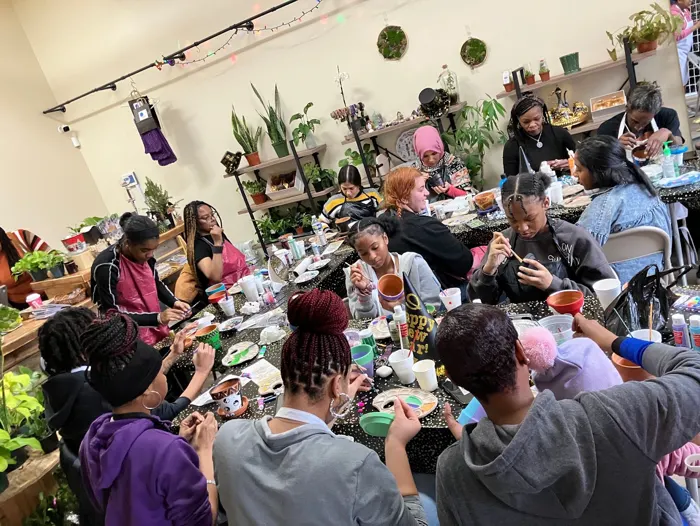
A vision board, also called a dream board, is a collage of words, images and other items that stand for your goals, dreams and desires. It is a picture of how you see your future. At Inner Vision Arts, Danielle Wilson leads vision board workshops for kids ages 6 to 12, for teens and for adults, because she believes you're never too old to switch gears and chase what you love.
But do vision boards actually work? The honest answer is: it depends on how you build them. A board covered in pretty pictures can be a lovely thing to look at. A board built with a few research-backed tricks can become a daily coach that helps you take the next step. Let's look at what the science says.
Dreaming is the start, not the whole plan
Psychologist Gabriele Oettingen has spent more than twenty years studying motivation. Her work, shared through the WOOP program, found something surprising: simply imagining a happy future is not enough. People do better when they picture the dream and then honestly name the inner obstacle that could get in the way. WOOP stands for Wish, Outcome, Obstacle and Plan.
This idea has been tested many times. A 2021 review of 24 studies with 15,907 people found that pairing a dream with its obstacles and a plan helped people reach their goals. The effect was small to medium, which is still real progress for a few minutes of thinking.
The secret ingredient: "if-then" plans
The "Plan" part of WOOP comes from research on what scientists call implementation intentions. That is a fancy name for an if-then plan, like "If it's 7 a.m. on Saturday, then I sketch for 20 minutes." A well-known review of 94 tests found that these simple plans had a medium-to-large positive effect on reaching goals. They helped people get started, stay on track and avoid distractions.
So here's our first tip: give your board a small "if-then" corner. Next to the picture of your dream, write one if-then sentence you can actually do this week.
Why pictures stick in your mind
There's a reason a vision board uses images and not just a written list. Researchers at the University of Waterloo found that people often remembered more than twice as many words they drew as words they only wrote out. Even better, the quality of the drawing didn't matter. Stick figures count!
That's why we love adding a hand-drawn touch to every board. Cut out a magazine photo, sure, but also draw a tiny symbol of your goal yourself. Your brain will thank you.
The making itself feels good
Building a board is also a creative break. In a Drexel University study right here in Philadelphia, 39 adults spent 45 minutes making art with markers, clay or collage. About 75% had lower levels of cortisol, a stress hormone, afterward. Past art experience made no difference.
It's worth saying clearly: formal art therapy is a mental health profession practiced by credentialed art therapists. Inner Vision Arts offers therapeutic, fun art workshops, a joyful space to create, not a treatment. Research simply suggests that making something with your hands can help you feel calmer and more focused.
How to build a board that works
- Pick one to three big wishes. Health, relationships, home, personal growth, hobbies, career or travel. Fewer wishes means more focus.
- Show the outcome. Find or draw images of how it will look and feel when you get there.
- Name the obstacle. Add a small, honest note: "I get tired after work," or "I put it off."
- Write your if-then plan. One clear sentence for each wish.
- Track your progress. The National Institutes of Health notes that tracking your progress helps you spot your strengths and stay on course. Add a sticky note each week with one small win.
Choose images that feel like you, not what you think you "should" want. Motivation researchers describe autonomy, the feeling that your actions are your own, as a basic human need that fuels lasting motivation.
You don't have to be "an artist"
If you've been wondering whether you're creative enough, you're in good company. According to the National Endowment for the Arts, 52% of U.S. adults created or performed art in 2022. That's about 129 million people. Making things is a normal, joyful part of life.
Make your board with us
Danielle's passion is helping people see their future more clearly, one image at a time. In our vision board workshops, we bring the magazines, glue, markers and good energy. You bring your dreams. Learn more on our Vision Boards workshop page, or book a vision board workshop for your group, school or workplace.
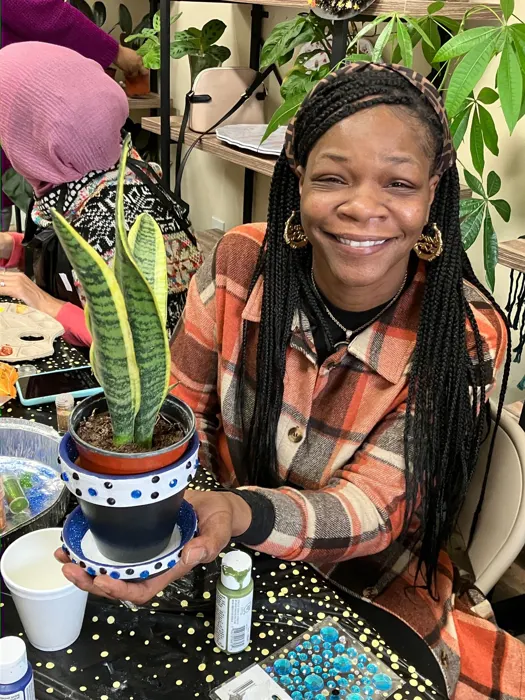
Planning one for a child? Read our guide to vision-boards-for-kids.html. Want a creative warm-up first? Try our online Pot Studio. Questions? Call us at (215) 407-0344. When you're ready to picture your next chapter, save your seat.
By the numbers
Try this at home
- Write one dream on an index card, then add one obstacle and one if-then plan underneath it.
- Draw a tiny symbol for each goal on your board yourself, even if it's a stick figure.
- Add a sticky note to your board each Sunday with one small win from the week.
- Hang your board where you'll see it every morning, like next to the mirror or coffee maker.
Want to try it virtually first? Paint a 3D pot in our Pot Studio →
Bring it to your group
Vision Boards with Danielle
A collage of words and images that pictures the future you want. We come to you, all materials included. Book at least 2 weeks ahead.
Sources
- Frontiers in Psychology (PMC): A Meta-Analysis of the Effects of Mental Contrasting With Implementation Intentions on Goal Attainment
- University of Konstanz: Implementation intentions and goal achievement, a meta-analysis
- WOOP: The Science Behind WOOP
- University of Waterloo: Need to remember something? Better draw it
- Drexel University: At Any Skill Level, Making Art Reduces Stress Hormones
- NIDDK (NIH): Changing Your Habits for Better Health
- National Endowment for the Arts: Arts Participation Patterns in 2022
- American Art Therapy Association: About Art Therapy
This article shares general information about creativity and wellbeing. It is not medical or mental-health advice. Formal art therapy is provided by credentialed art therapists; Inner Vision Arts offers therapeutic, fun art workshops.